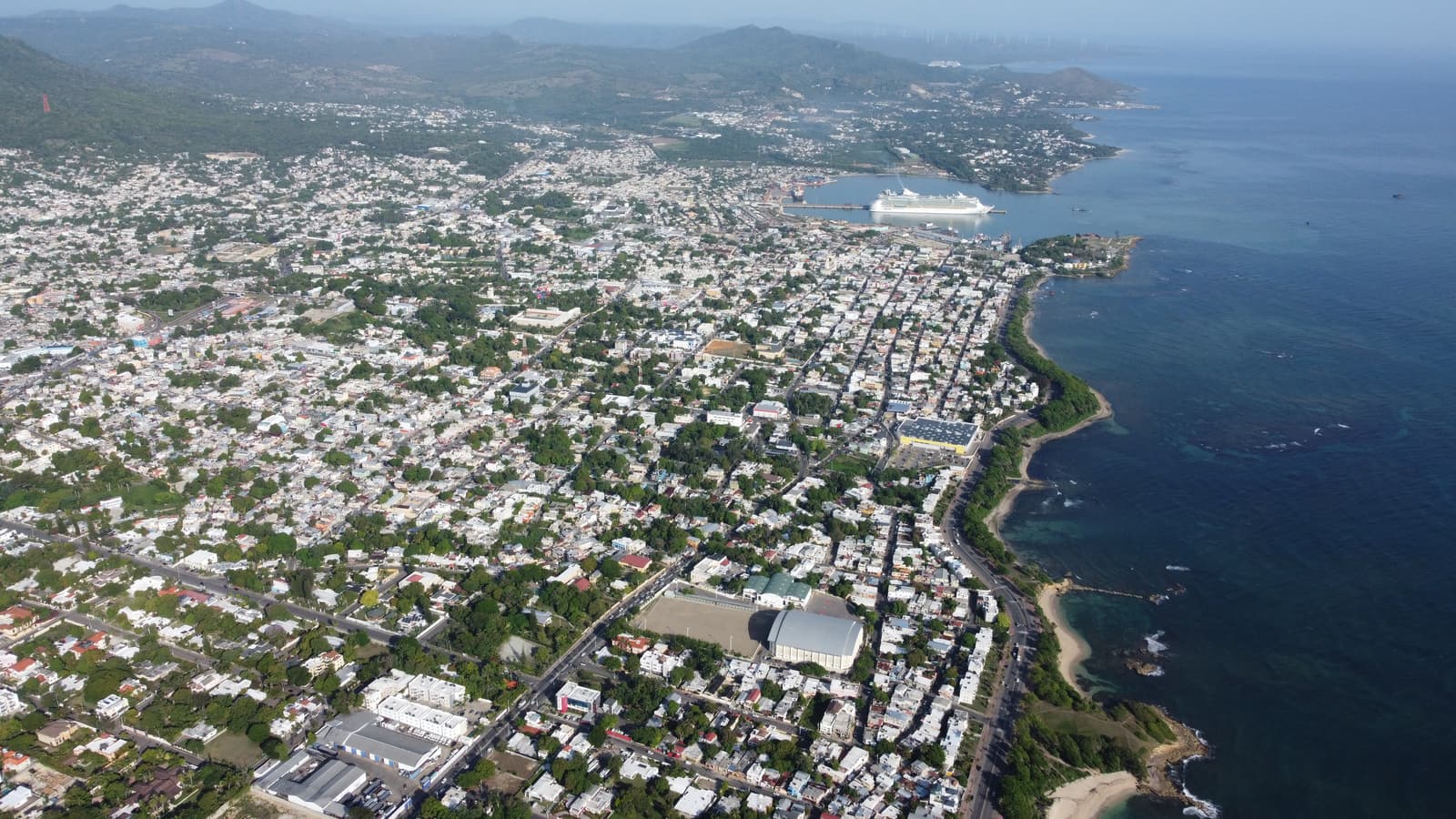
San Felipe de Puerto Plata is the main city of the Dominican Republic’s north coast, the "Amber Coast": a working port of around 150,000 people squeezed between the Atlantic and the green wall of Mount Isabel de Torres. It was the birthplace of mass tourism in the country in the 1980s, lost ground to Punta Cana, and has been revived since 2015 by two cruise terminals and a repainted historic centre.
A very short history
Columbus sailed past in January 1493 and is said to have named the mountain Monte de Plata — silver mountain — for the shining cloud on its summit. The town was founded by the Spanish at the beginning of the 16th century and prospered on trade and smuggling until, in 1605–06, the Crown ordered the north coast emptied to stop contraband with the Dutch and English. Resettled in the 18th century, Puerto Plata boomed in the 19th on tobacco shipped to Hamburg and Bremen; the Victorian houses of the centre are the legacy of those merchants. In the 1860s it was the base of General Gregorio Luperón, leader of the war that restored independence from Spain, and for a time the country’s provisional capital.
To the west, at La Isabela, lie the remains of the settlement Columbus founded on his second voyage in 1494 — among the very first European towns in the Americas.
Quick facts
| Country | Dominican Republic (shares the island of Hispaniola with Haiti) |
|---|---|
| Language | Spanish; English widely understood at the port, in resorts and on tours |
| Currency | Dominican peso (DOP); US dollars widely accepted in tourist areas |
| Time zone | Atlantic Standard Time, UTC−4, no daylight saving |
| Electricity | 110 V, flat two-pin plugs as in the USA |
| Emergency number | 911 |
| Cruise ports | Taino Bay (downtown) and Amber Cove (Maimón) |
| Airport | Gregorio Luperón International (POP) |
 A short ride from the port
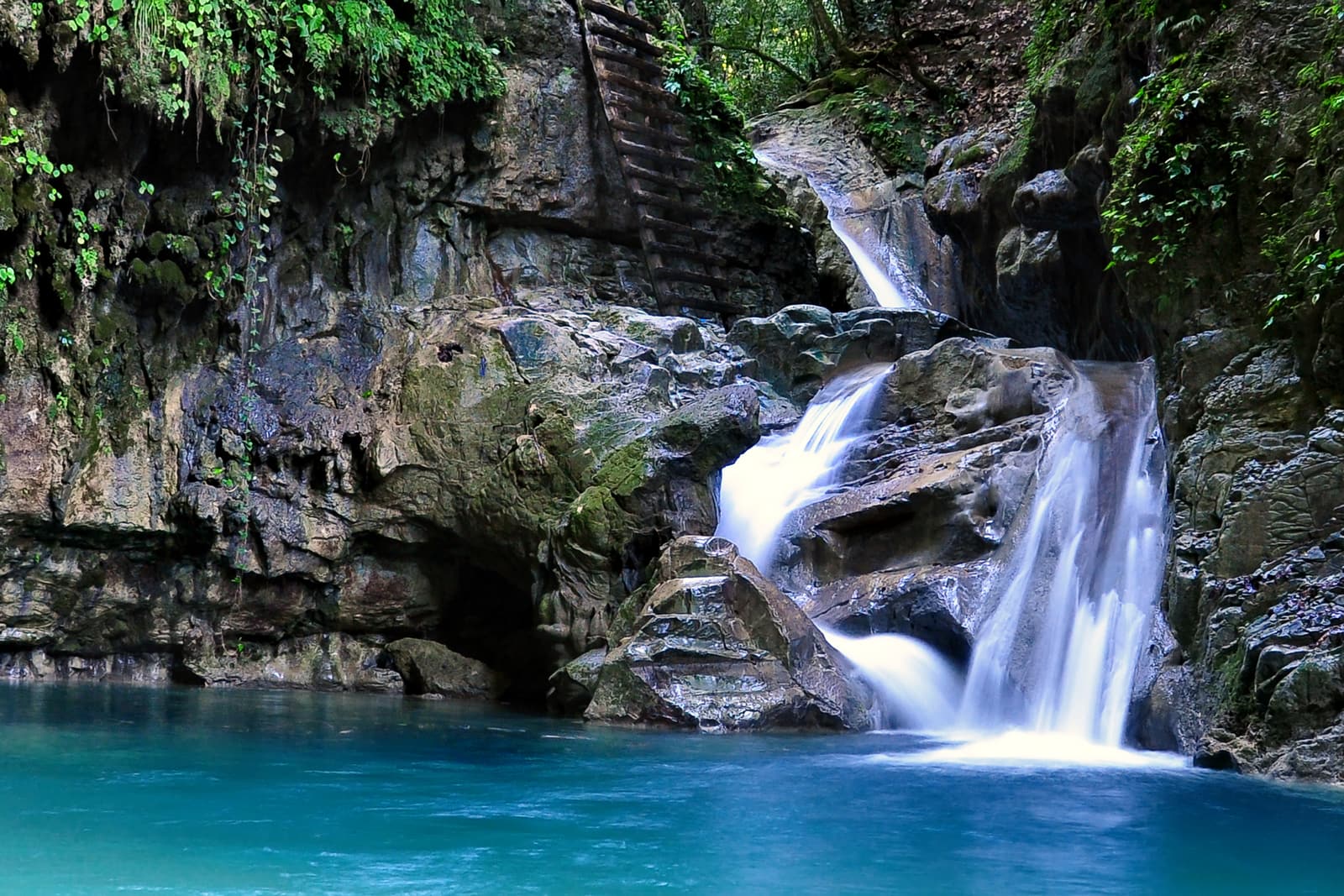
27 Charcos de Damajagua
Slide and jump down a jungle river
A chain of 27 waterfalls and pools cut into the limestone hills near Imbert, about half an hour inland from Puerto Plata. You hike up with a park guide and come back down the river itself — sliding over smooth rock chutes and jumping into deep green pools. It is the north coast’s signature excursion.
 On foot from Taino Bay
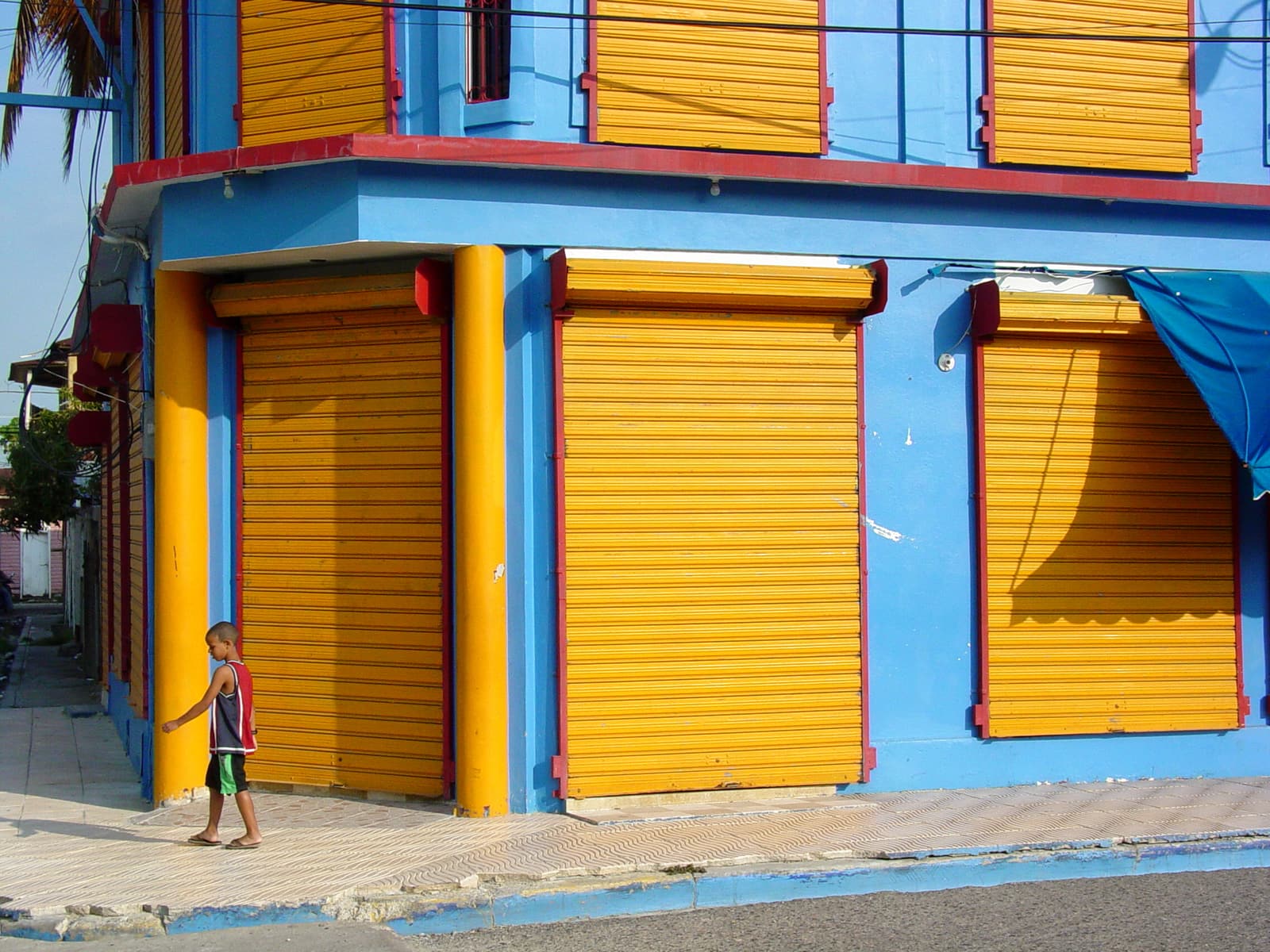
Puerto Plata Old Town
Victorian houses, a pink street and a sky of umbrellas
The historic centre begins a short walk from the Taino Bay gate: a grid of pastel wooden houses with gingerbread trim around Parque Independencia, its two-storey gazebo and the twin-towered San Felipe cathedral, plus the photogenic Umbrella Street and the all-pink Paseo de Doña Blanca.
 On foot from Taino Bay
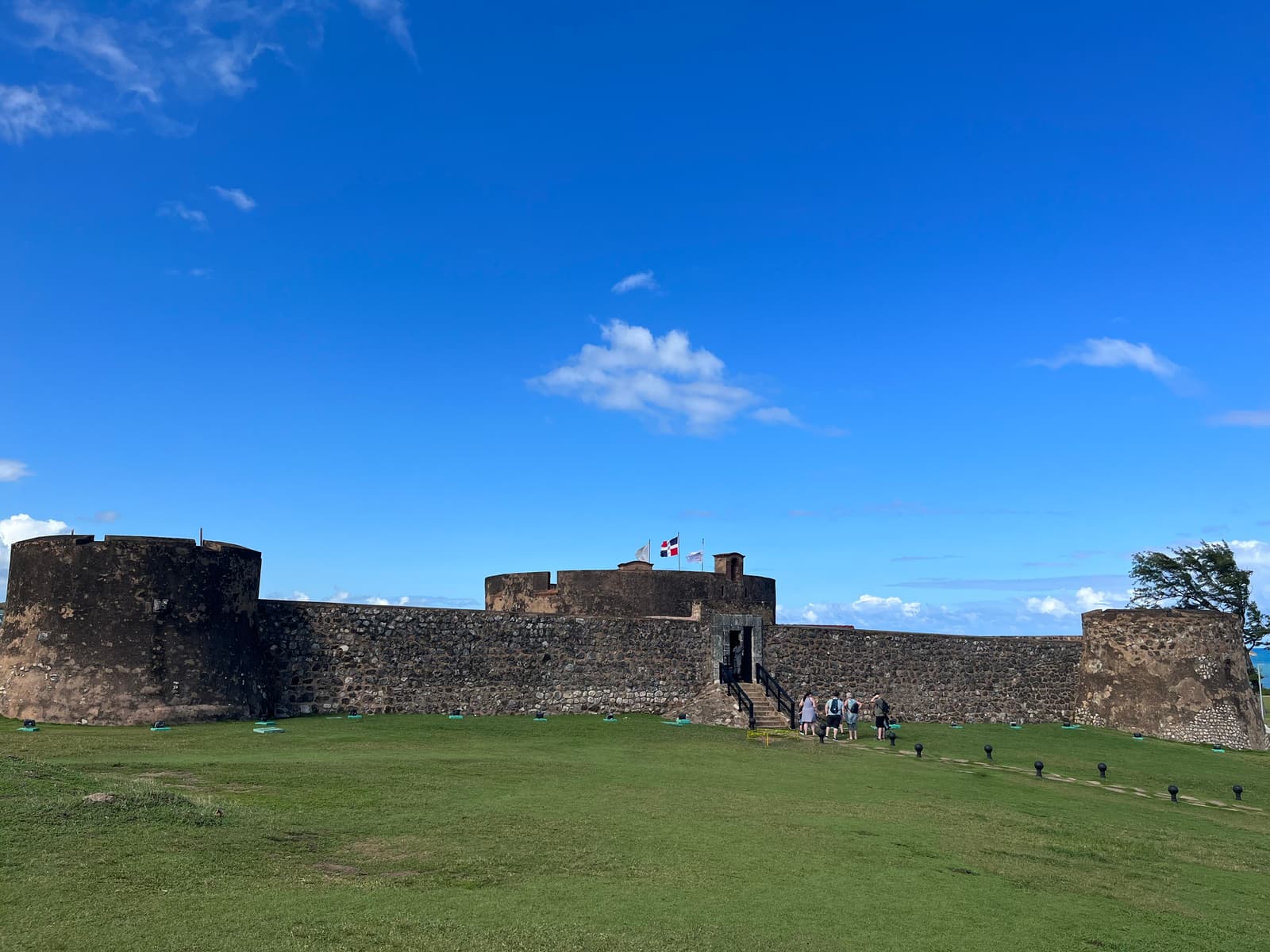
Fortaleza San Felipe
A 16th-century Spanish fort on the headland
Built by the Spanish in the second half of the 16th century to guard the bay against pirates and rival powers, this compact stone fort sits on the La Puntilla headland at the western end of the Malecón — close enough to Taino Bay that you can see the ships from its walls.
 A short ride from the port
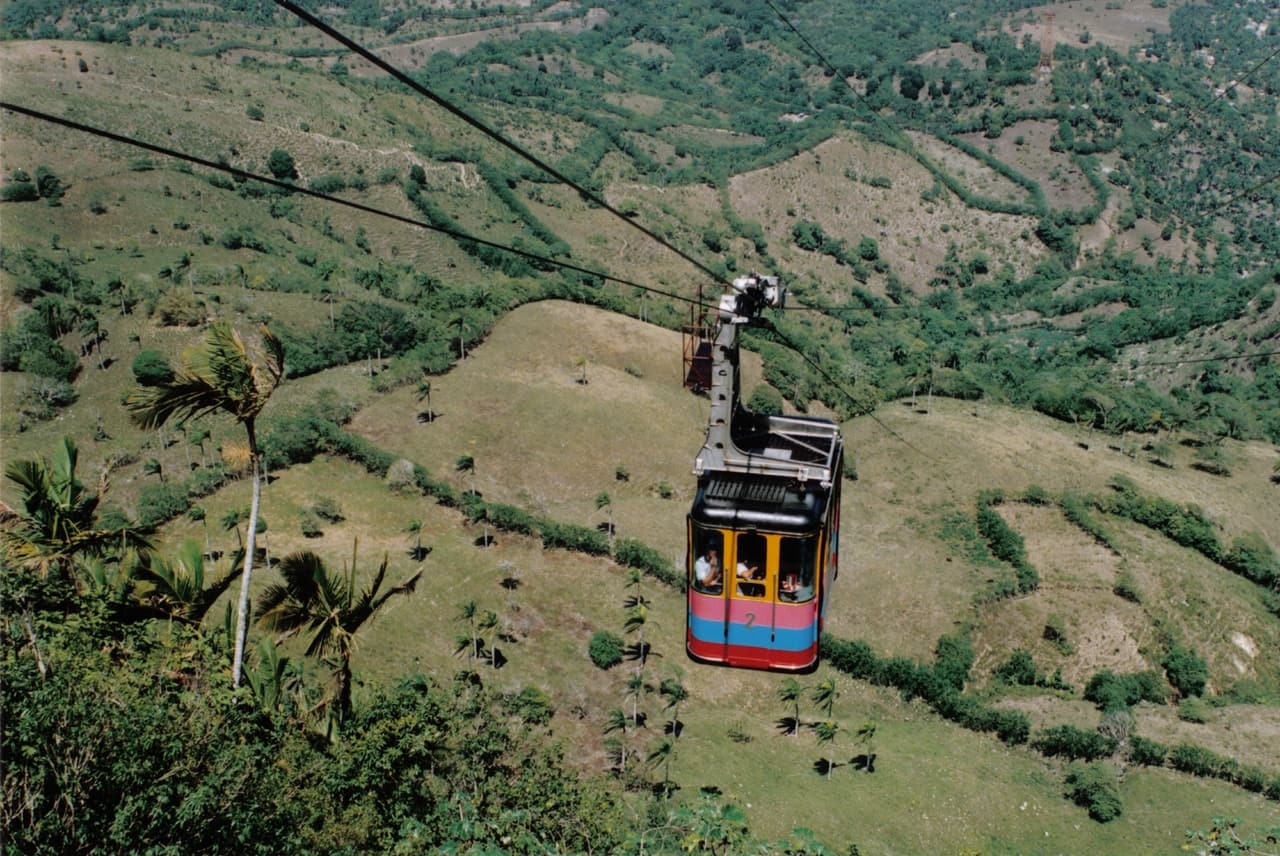
Teleférico & Pico Isabel de Torres
The Caribbean’s cable car to a mountain in the clouds
A cable car climbs from the edge of town to the top of Mount Isabel de Torres, close to 800 m above the sea, where a Christ the Redeemer statue stands over a botanical garden and — on a clear day — the whole coast lies at your feet. Cloud and maintenance closures are common, so treat it as a bonus.
The places that matter
These four cover the essentials; all ten are on our things to see page.
Safety
Puerto Plata receives well over a million cruise visitors a year, and the great majority have no trouble at all. The Dominican Republic does have a real crime problem, however, and common sense applies.
- Stay central in daylight. The port, the fort, the Malecón by day, the central park and the streets between them are busy and policed by Politur, the tourist police.
- Leave valuables on the ship or in the hotel safe. Carry a copy of your passport, one card and modest cash.
- Phones: snatches from passing motorbikes are the classic local crime. Step away from the kerb to use yours.
- After dark take a taxi door to door rather than walking, including along the Malecón.
- Roads are the biggest real danger. Cross carefully — motorbikes come from every direction — and think twice before renting a scooter.
- Sea: the north coast faces the open Atlantic. Respect flags and local advice, particularly in winter.
- Drinks: stick to sealed bottles and established bars; never leave a drink unattended.
Before travelling, read your own government’s current travel advice for the Dominican Republic.
Money, prices and tipping
The currency is the Dominican peso. For a port day you do not need any: taxis, tours, the port shops and the tourist streets all quote in US dollars. Bring plenty of ones, fives and tens — large notes are hard to change, and change often comes back in pesos at a rate that favours the seller. Euros, pounds and Canadian dollars are much less useful; exchange them or use a card.
- ATMs at banks around the central park dispense pesos. Use machines inside or attached to a bank, in daylight.
- Cards are accepted in the port, resorts, larger shops and restaurants; small vendors are cash-only. Tell staff to charge in pesos or dollars, not your home currency.
- Restaurant bills normally include 18% tax (ITBIS) and a 10% legal service charge. An extra tip in cash for good service is customary.
- Guides and drivers rely on tips: a few dollars per person for a half-day tour is usual, more for a private guide. The river guides at Damajagua earn theirs.
- Bargaining is expected at stalls and with freelance vendors, not in shops with marked prices.
Language and manners
Spanish is the language of everything outside the tourist bubble, spoken fast and with dropped consonants. A greeting goes a long way: buenos días before any request, por favor, gracias. Dominicans are warm, direct and curious; conversations with strangers are normal. Dress is casual, but swimwear belongs on the beach and at the pool — cover up for town and for churches.
Health and comfort
- Water: do not drink tap water. Bottled water is cheap and sold everywhere; ice in established bars and resorts is made from purified water.
- Sun and heat: the sun is fierce all year. Hat, high-factor reef-safe sunscreen and more water than you think you need.
- Mosquitoes can carry dengue. Use repellent, especially around dawn and dusk and in the countryside.
- Stomach upsets are the commonest complaint. Wash or sanitise hands, and be cautious with salads and seafood from street stalls.
- Medical care: there are private clinics in Puerto Plata used to treating visitors. Travel insurance that covers them is essential for stay-over travellers.
What to buy
- Amber — the north coast’s own gem. Learn the basics at the Amber Museum first and buy from an established shop.
- Larimar — a sky-blue stone found only in the Dominican Republic, set in silver.
- Rum — Brugal has been made in Puerto Plata since 1888; Barceló and Bermúdez are the other big names.
- Cigars — the Cibao valley over the mountains is one of the world’s great cigar regions. Buy from proper shops with humidors.
- Coffee, cocoa and chocolate — grown in the hills; easy to pack.
- Mamajuana — rum, red wine and honey steeped with bark and herbs; sold everywhere, and an acquired taste.
Do not buy anything made of turtle shell, black coral or other protected wildlife: it is illegal to export and to bring home. Check your cruise line’s and your country’s rules on bringing back alcohol and tobacco.
What to eat and drink
Lunch in town means la bandera ("the flag"): rice, red beans and stewed meat with salad. Look also for mofongo (mashed fried plantain with garlic and pork crackling), sancocho (a hearty stew of several meats and root vegetables), fried fish with tostones on the beach, and fish in coconut sauce. Wash it down with an ice-cold Presidente beer, fresh passion-fruit juice (chinola) or a morir soñando of orange juice and milk.
Accessibility
The Taino Bay port village is modern and largely step-free. The city is not: expect high kerbs, broken pavements and few ramps. The seafront around the fort and the Malecón promenade are the easiest areas for wheelchairs and pushchairs. Resorts at Playa Dorada generally have adapted rooms and flat paths — confirm specifics with the hotel. Of the main excursions, city tours by vehicle are the most adaptable; the waterfalls, buggies and ziplines are not suitable for limited mobility. See the accessibility notes in the port guide.
Travelling with children
The port pool and lazy river, the beaches at Playa Dorada and Sosúa, the monkey sanctuaries and — for older children — the Damajagua waterfalls are the family favourites. Check minimum ages on adventure tours before booking, bring child-size life jackets if you have them, and plan around the midday heat.
If you are staying: a three-day outline
- Day 1: the old town, the fort and the Amber Museum in the morning; the cable car if the mountain is clear; sunset on the Malecón.
- Day 2: the Damajagua waterfalls — twelve or all twenty-seven if you are fit — and a lazy afternoon on Playa Dorada.
- Day 3: Cayo Arena for the full day, or Sosúa for snorkelling and Cabarete for dinner on the beach.
What to pack for a port day
- Ship card and photo ID; a copy of your passport.
- Small US dollar notes and one card.
- Swimwear under your clothes, a towel from the ship, water shoes for the falls.
- Hat, sunglasses, reef-safe sunscreen, insect repellent.
- A refillable water bottle and a waterproof pouch for your phone.
- A watch set to ship time.